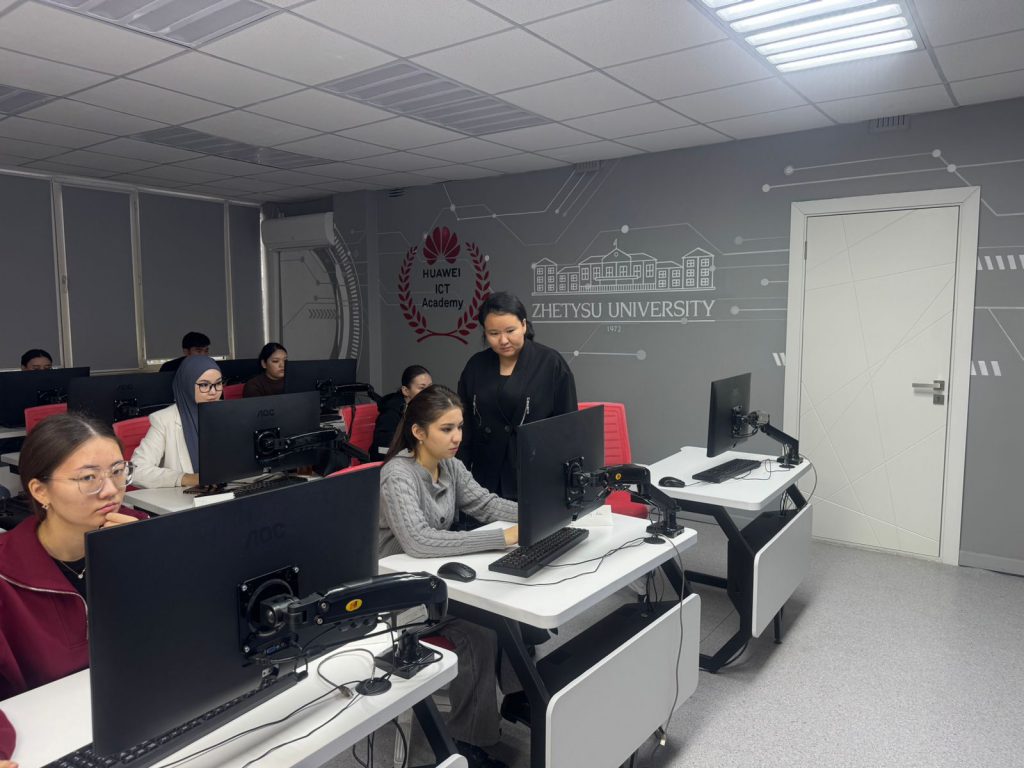
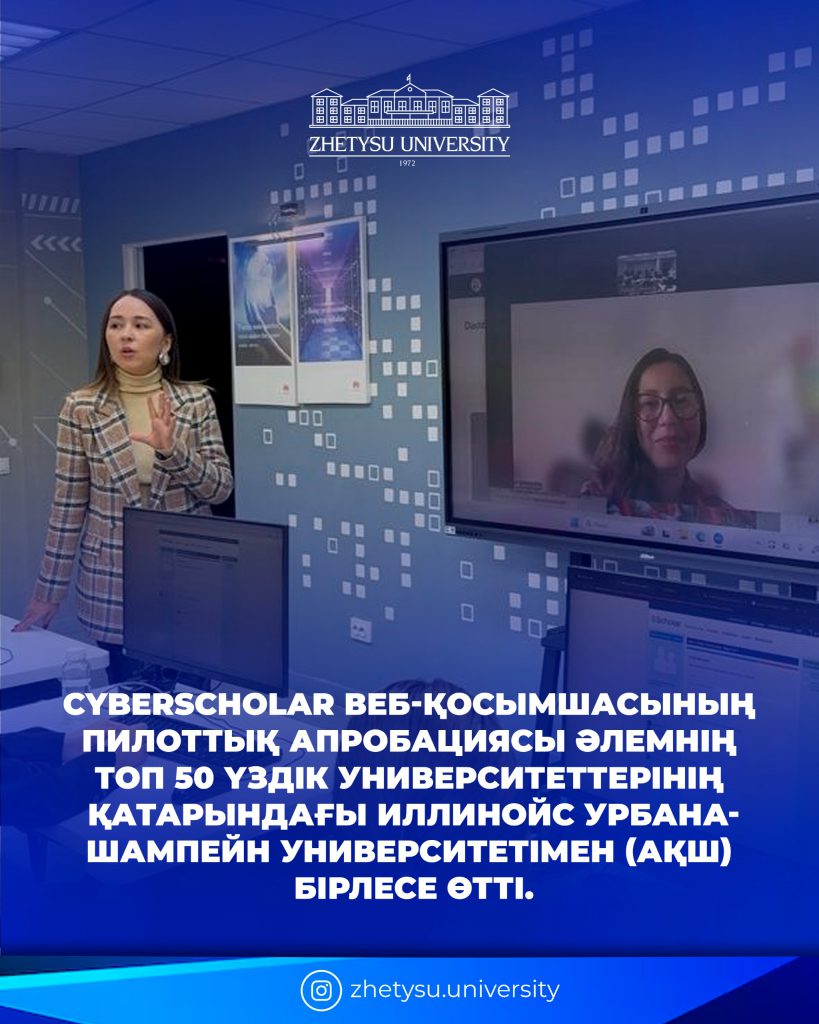
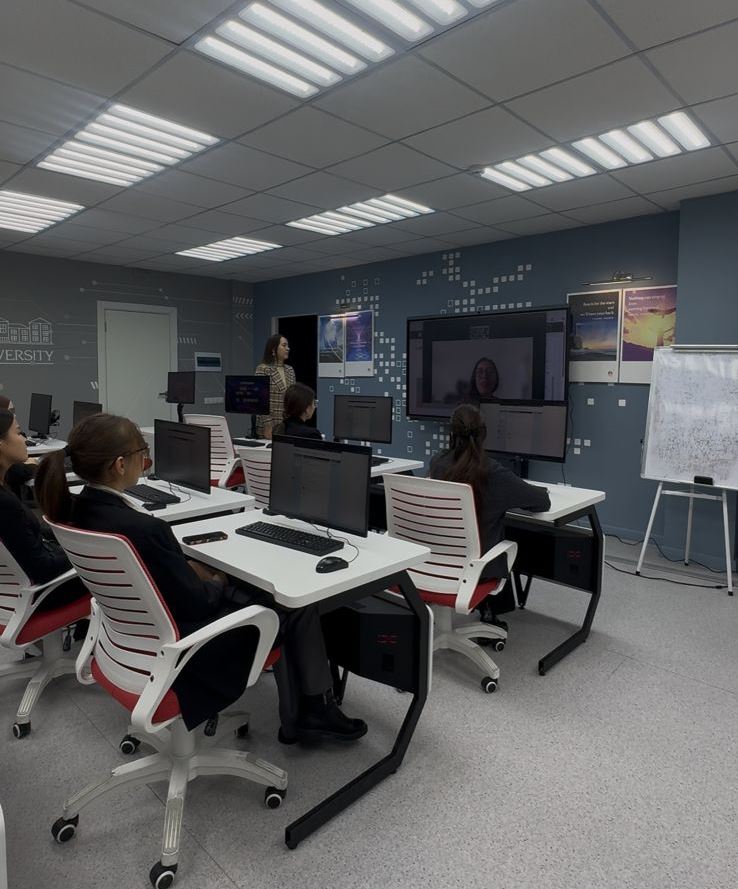
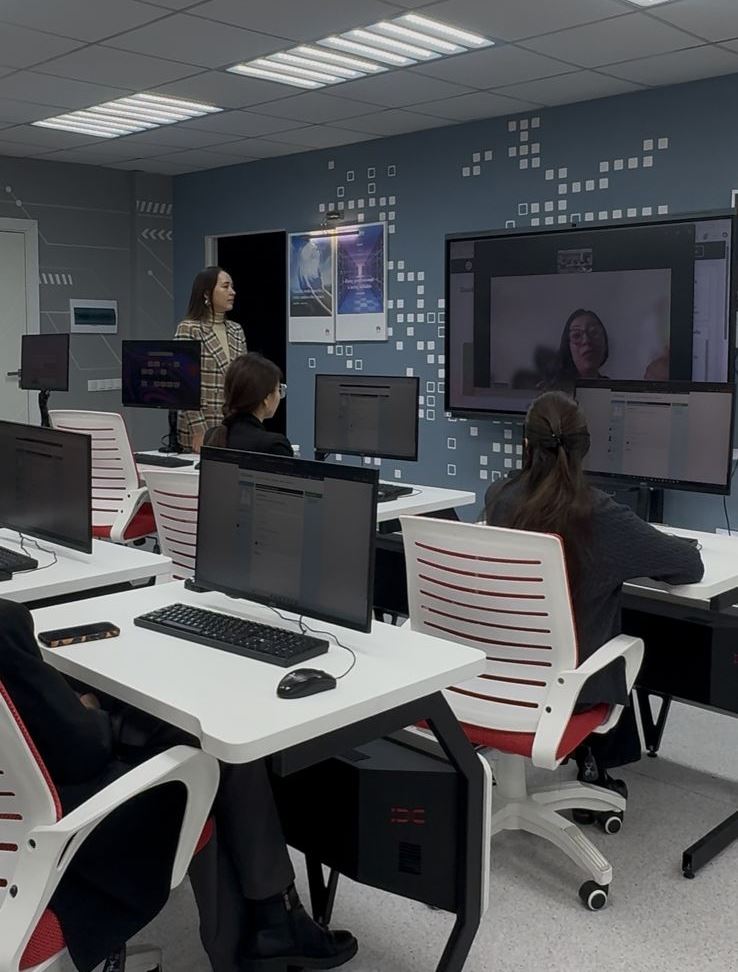
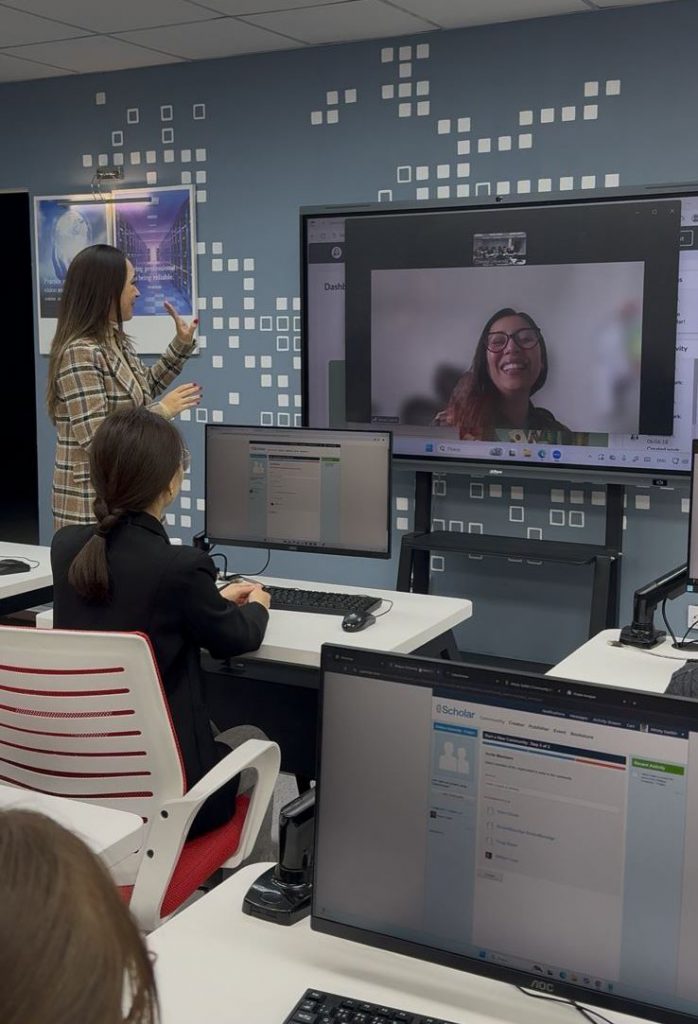
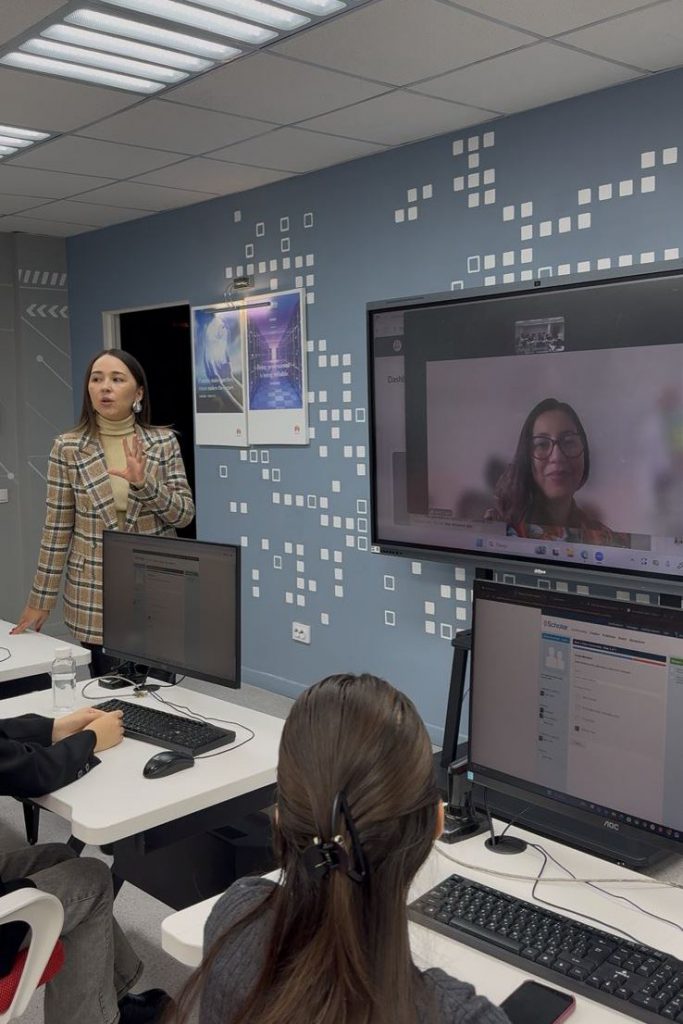
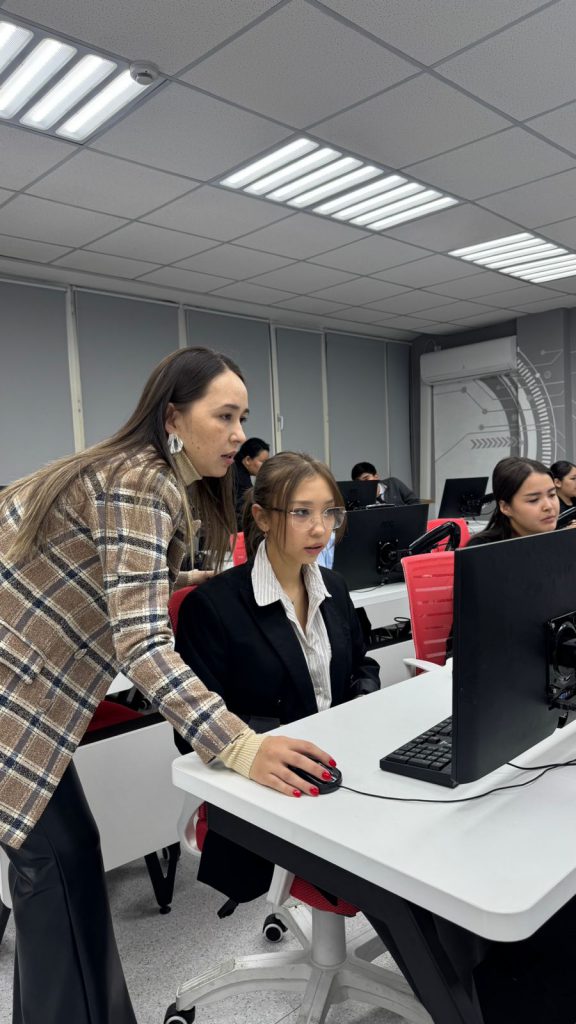
On November 14, 2025, at the Huawei ICT Academy of I. Zhansugurov Zhetysu University, the pilot testing of the CyberScholar web application was carried out within the framework of the scientific project AP25794537 “Artificial Intelligence as an Assistant in Mastering Academic English for Students of Non-Language Majors: A Randomized Study.” The event was attended by Dr. Vania Castro, a researcher from the University of Illinois at Urbana–Champaign (UIUC), who shared her expertise.
UIUC, ranked among the Top 50 universities worldwide and the Top 20 institutions in the Research category, is recognized as one of the global leaders in artificial intelligence and digital education.
During the pilot experiment, students uploaded their English-language essays to the CyberScholar platform and received precise and prompt feedback from the built-in artificial intelligence. They revised their work based on the suggestions, uploaded an improved version, and received criterion-based evaluations in the form of star ratings. By comparing students’ progress, researchers aim to assess the effectiveness of the platform.
Previously, CyberScholar was successfully piloted among high school students in six U.S. states. The project has since expanded geographically and is now being implemented in Brazil, Taiwan, and Kazakhstan.
The project leader, Dr. Raigul Zheldibayeva, is an affiliated researcher at the EPOL Department of the University of Illinois. Earlier, as part of the “500 Scholars” program, she spent one academic year at UIUC, conducted productive research, and co-authored several articles in high-ranking international scientific journals together with UIUC professors.
The successful implementation of this scientific project represents an important step toward the effective integration of artificial intelligence into Kazakhstan’s educational processes.
#SDG #ЦУР #ТДМ