
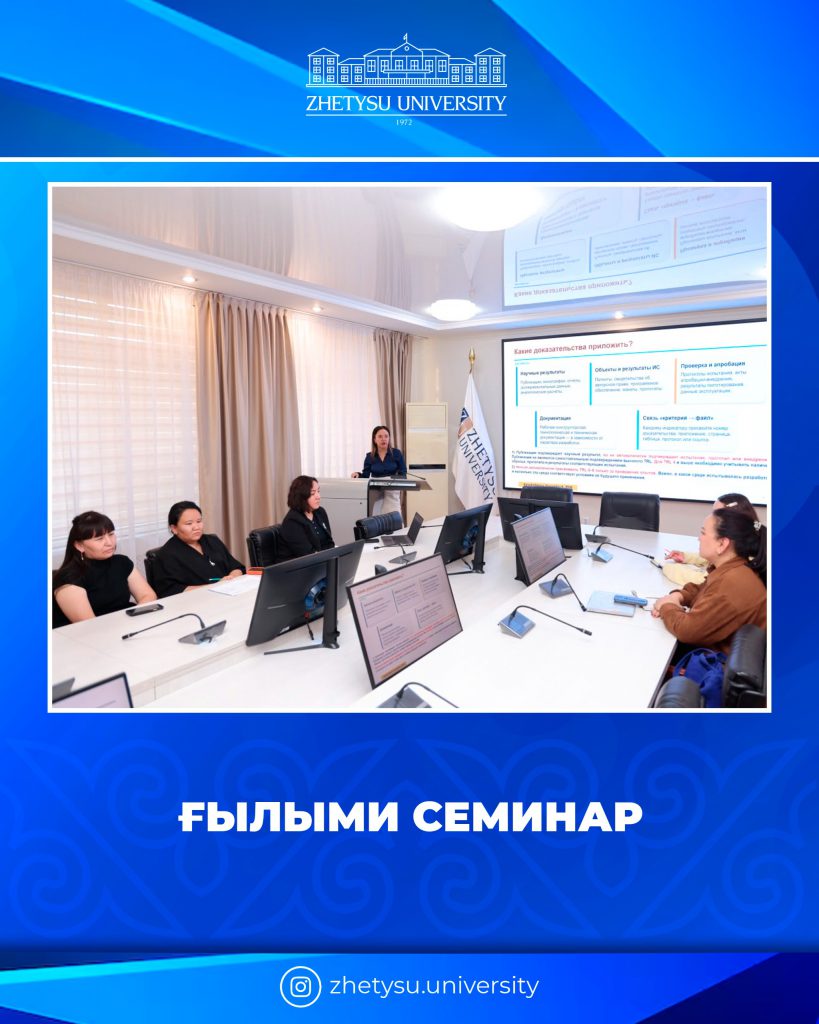
A scientific seminar dedicated to explaining the methodology for determining the Technology Readiness Level (TRL) of scientific and scientific-technical projects was held at Zhetysu University. The seminar was organized by the Office of Scientific Projects and Technology Commercialization. It brought together faculty members, university staff, young researchers, and individuals involved in preparing scientific projects and grant applications.
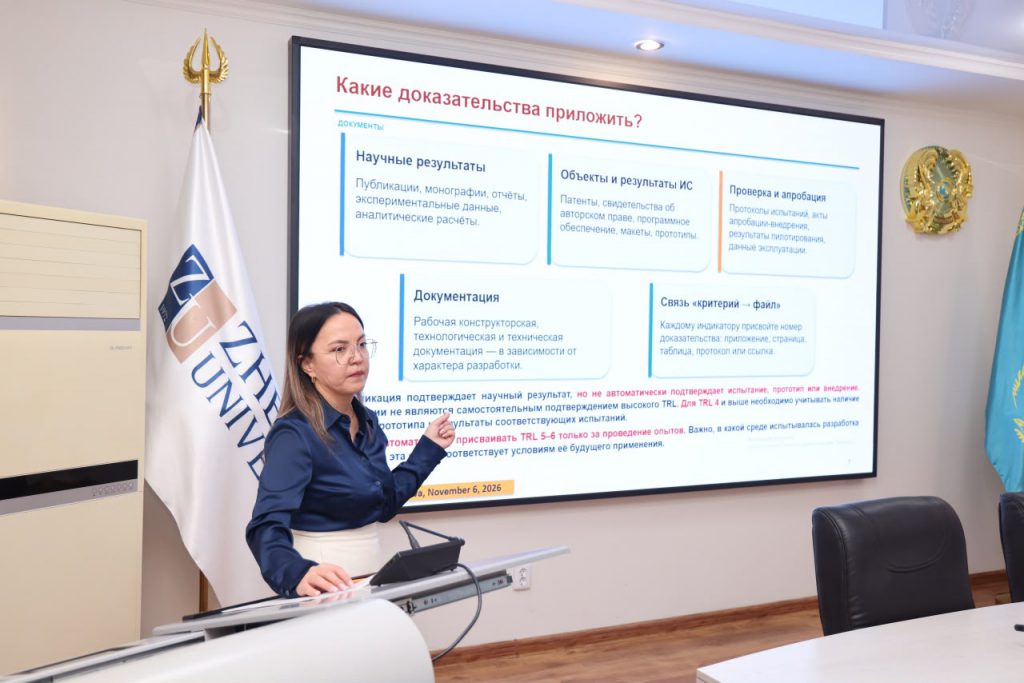
During the seminar, L. Karasholakova, Director of the Department of Science and Commercialization, explained the key principles and methodology for determining Technology Readiness Levels. The speaker discussed the specific features of TRL 1 through TRL 9, the correct identification of the initial and target TRL of a scientific project, and the documentation required to confirm the results achieved.
The presentation also addressed the assessment of projects in the natural, technical, and agricultural sciences, as well as the specific approaches used to determine the TRL of projects in the social sciences, humanities, education, and the arts. Participants learned about the role of scientific publications, patents, copyright-protected works, test reports, pilot testing and implementation certificates, experimental prototypes, and technical documentation in building an evidence base.
The seminar also covered common mistakes made when determining Technology Readiness Levels. In particular, the speaker emphasized that a scientific publication, patent, or letter of interest from a partner organization does not automatically confirm a high TRL. The initial TRL must be determined based on work completed and results obtained before the application submission date.
At the end of the seminar, participants asked questions about indicating TRLs in grant applications, preparing supporting documents, and justifying the planned outcomes of scientific projects. They received detailed explanations and practical guidance.
#SDG #ЦУР #ТДМ