

On November 4, 2026, an open lesson on “Hypotheses and How to Formulate Them” was held as part of the Academic Writing course for students of group ТҚҚ-311 (IP) enrolled in the 6B01602 — History and Social Studies (IP) educational programme. The lesson was conducted by Bekzat Tynysbekovna Kaliyeva.
The aim of the open lesson was to explain the meaning, types, and structure of scientific hypotheses and the principles of their formulation, as well as to develop students’ ability to propose scientifically grounded hypotheses aligned with a research problem.
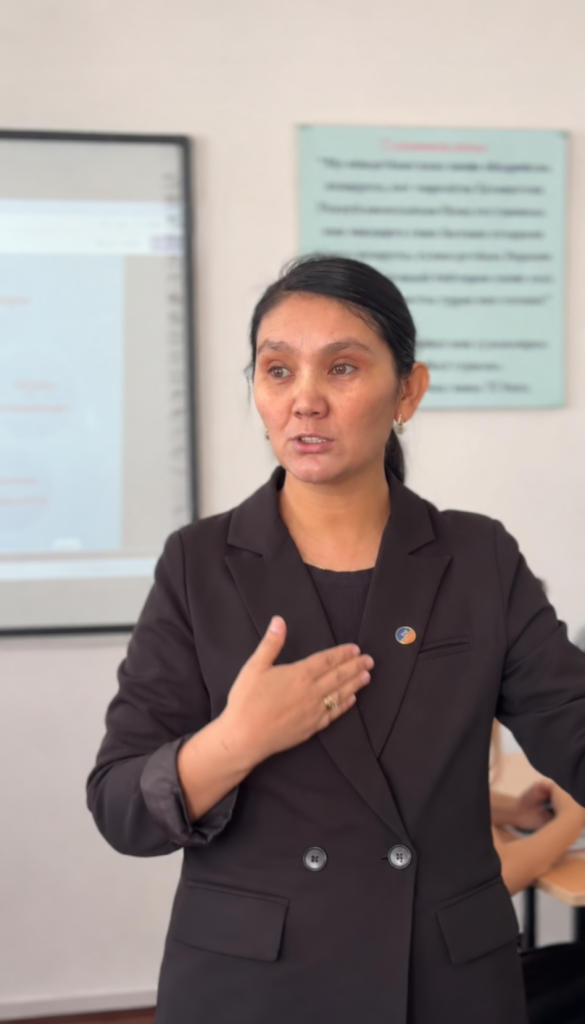
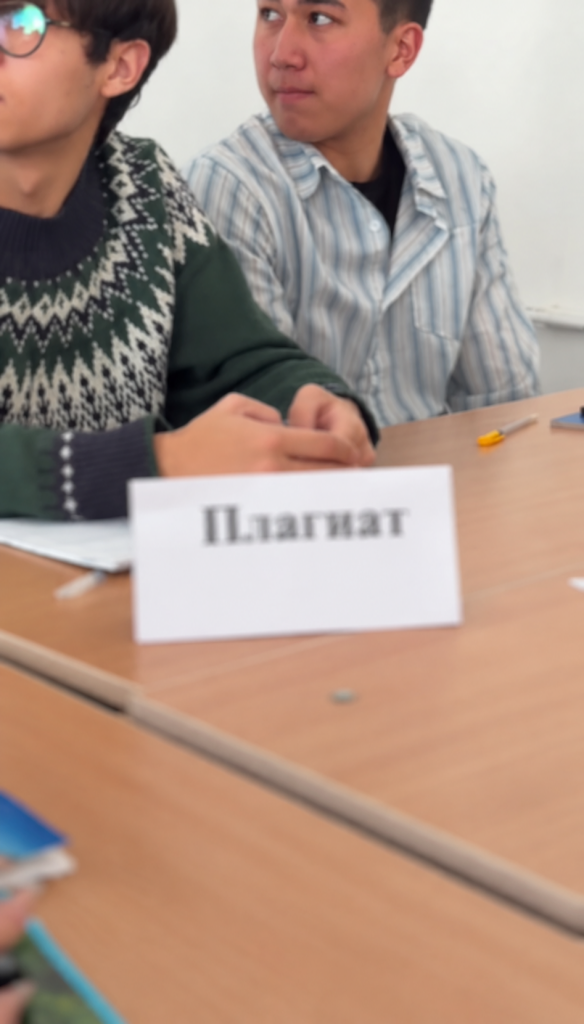
The lesson consisted of theoretical and practical sections. During the theoretical section, students’ attendance was recorded using Google Forms, and the topic and objective of the lesson were introduced. To reinforce the previously studied topic of plagiarism, students completed the “Identify Plagiarism” and “True or False?” activities using LearningApps and Canva. The new topic was explained through a presentation created on Prezi, followed by questions on Blooket about the types and structure of hypotheses.
During the practical section, students were divided into five teams: “Expert,” “Analysis,” “Invincible Intelligence,” “Research Methods,” and “Plagiarism.” Each team introduced its name, focus, and objective, selected a research problem, and formulated a scientific hypothesis addressing that problem. Students provided scientific justification for their hypotheses and analysed the opposing teams’ tasks.
During the “Critic’s Perspective” stage, the teams’ work was evaluated, and comments and suggestions were offered on the content of their hypotheses. At the end of the lesson, feedback was collected through Slido, allowing students to reflect on how well the lesson objective had been achieved and share their impressions and conclusions.
Digital educational platforms and interactive teaching methods were used effectively throughout the open lesson. Students participated actively, developing their skills in teamwork, analysing research problems, formulating scientific hypotheses, and supporting their opinions with evidence.