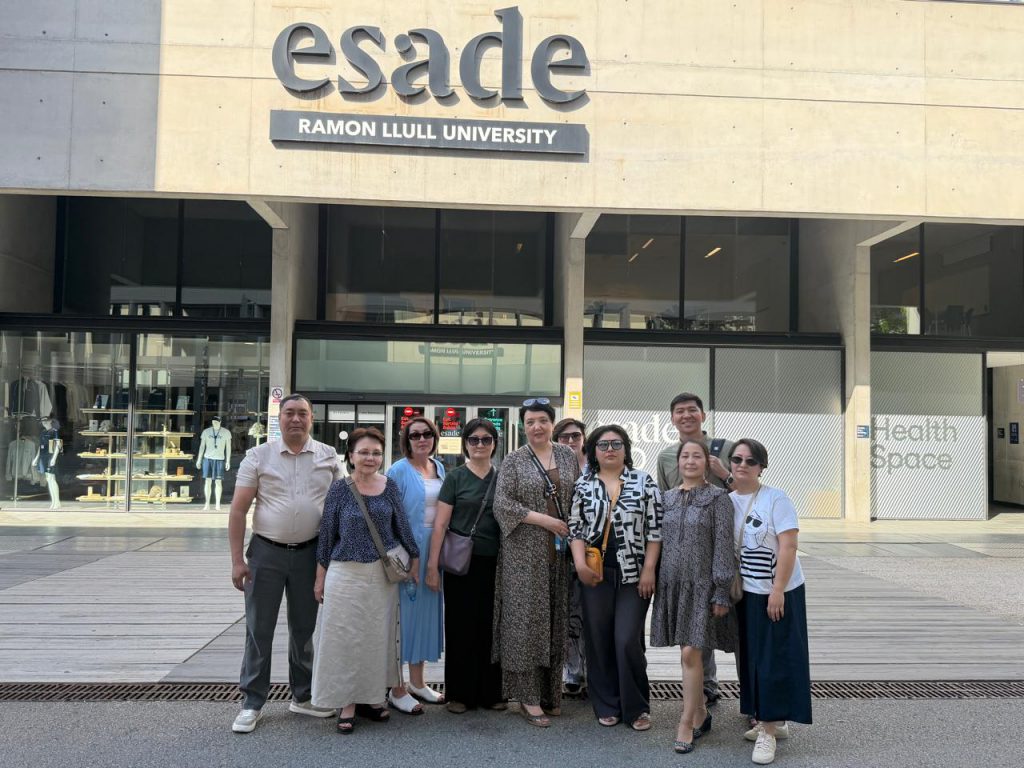
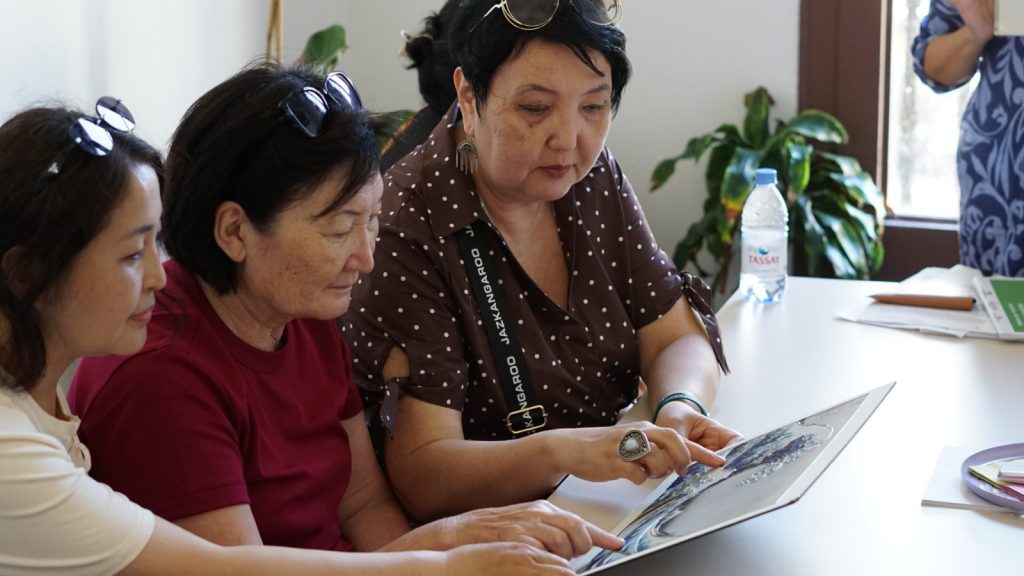
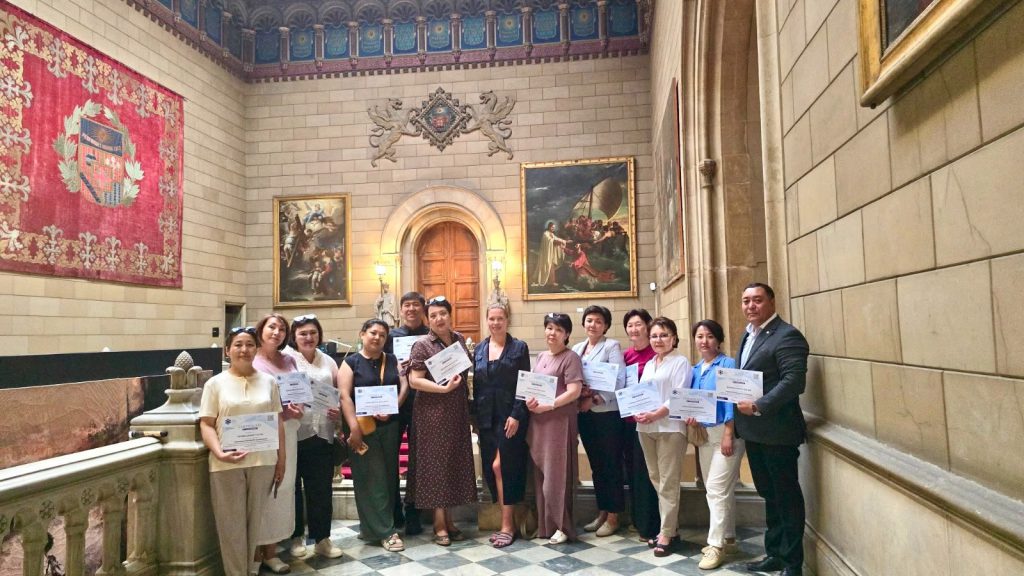
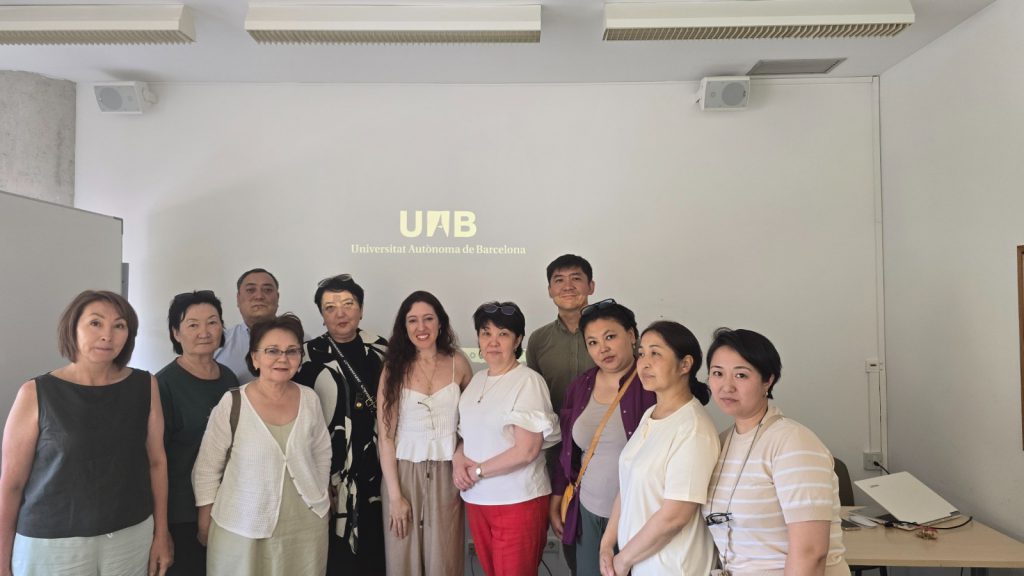
Within the framework of the targeted funding program implemented at I. Zhansugurov Zhetysu University under the Science Committee of the Ministry of Science and Higher Education of the Republic of Kazakhstan, IRN BR24993150 “Organization of Psychological and Pedagogical Support for Pre-vocational Training of Students with Disabilities,” the project team visited Barcelona (Kingdom of Spain) from June 14 to 20, 2026, to participate in advanced training courses on the topic “Preparing Persons with Disabilities for Professional Employment and Sustainable Labor Market Integration: Practices of the Inclusive System of Spain (Using Barcelona as an Example).” The project leader is Doctor of Pedagogical Sciences, Research Professor Z.A. Movkebayeva.
The project participants visited Specialisterne Spain, whose main mission is to promote the employment of people with autism spectrum disorders and other forms of neurodiversity. The company’s activities include vocational training and development of work skills for people with autism; employment support in mainstream companies; implementation of projects aimed at introducing neurodiversity principles in organizations; provision of information technology services (software testing, data processing, document digitization, database administration, etc.); and consulting employers on workplace adaptation and inclusive team management.
The participants also became acquainted with the supported employment system in Catalonia, which is considered one of the most advanced models of labor inclusion for people with disabilities in Europe. A key role in its development has been played by Fundació Aura, established in 1989 and recognized as the first project in Spain to implement the supported employment methodology. This model is based on individualized job placement, vocational training, support during workplace adaptation, and ongoing assistance from job coaches.
A significant contribution to the development and dissemination of this practice is made by the Catalan Association for Supported Employment (ACTAS), which brings together 33 organizations from Catalonia and Andorra. The association coordinates supported employment services, cooperates with government authorities and employers, and promotes the improvement of the legal framework in the field of labor inclusion. The experience of Fundació Aura and ACTAS demonstrates the effectiveness of supported employment as a tool for ensuring equal opportunities and sustainable employment for people with disabilities in the open labor market.
The participants also visited Casa Batlló, an employer-partner of Specialisterne Spain in employing people with neurodiverse conditions. Within the labor inclusion program, candidates are selected according to their individual abilities and professional interests, after which employees receive specialized training and support from mentors during the adaptation period. Comfortable working conditions are created through clearly structured tasks, easy-to-understand instructions, and support from supervisors and colleagues. This approach enables people with various forms of neurodiversity to successfully perform duties in visitor services, guest flow management, digital projects, and other areas of museum operations, while contributing to a more inclusive organizational culture.
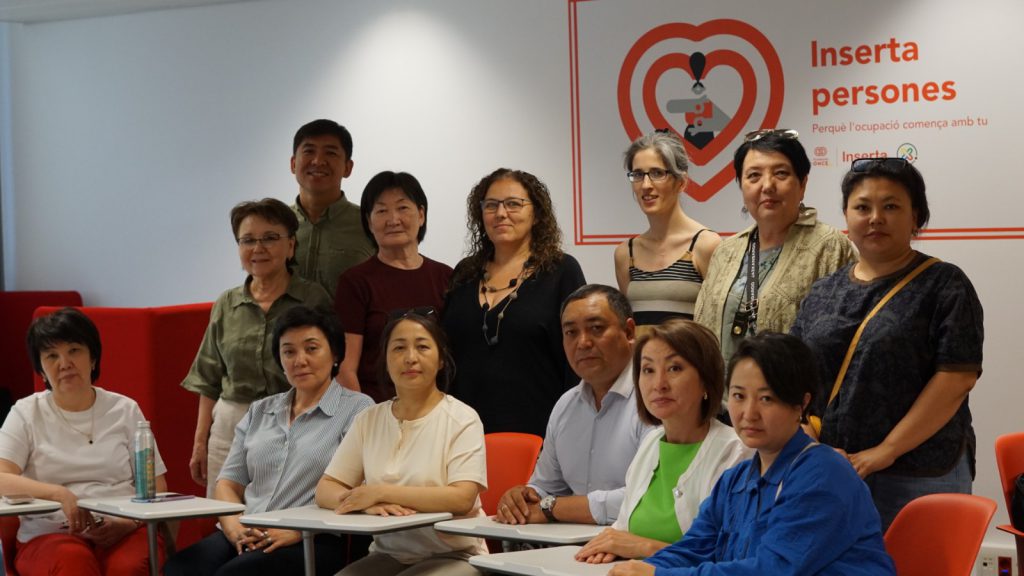
As part of the training program, a meeting was organized at Fundación ONCE / Inserta Empleo. This organization is one of Spain’s leading institutions in promoting employment and social inclusion for people with disabilities. It provides career guidance, training, workforce skills development, and employment support services, helping individuals with disabilities secure jobs in the open labor market. An important area of its work is collaboration with employers: Inserta Empleo advises companies on inclusive hiring practices, workplace adaptations, and the creation of accessible work environments. As a result, thousands of people with disabilities gain opportunities for professional development and sustainable employment every year.
The participants also met with coordinators from AccessLab, an expert organization in accessibility and inclusion, where they learned about innovative initiatives aimed at promoting accessibility and digital inclusion for people with disabilities. Discussions focused on the development and testing of technological solutions designed to remove barriers in education, employment, culture, and everyday life. AccessLab operates according to the principles of co-design, whereby people with disabilities directly participate in evaluating and improving digital products and services. This approach contributes to the creation of more accessible technologies and expands opportunities for the participation of people with disabilities in social and professional life.
A visit to the University of Barcelona, including a tour of its historic building and exhibitions, provided an opportunity to learn about barrier-free access practices for students with disabilities in Spain’s higher education system. The participants also visited the Autonomous University of Barcelona, one of the leading institutions in inclusive higher education in Spain. Through its specialized disability support services, the university provides academic assistance, adaptation of learning processes, assistive technologies, sign language interpretation, accessible learning environments, and guidance for faculty members.
The inclusive vocational education center Institut Escola del Treball implements the principles of inclusive education for students with diverse educational needs. The center provides adapted educational programs, psychological and pedagogical support, career guidance services, and cooperation with employers to organize internships and facilitate future employment opportunities for students with disabilities.
The training program also included an educational study visit aimed at exploring the accessible urban environment, barrier-free infrastructure, and inclusion practices for people with functional diversity.
Participation in these professional development courses enabled the participants to study Spain’s experience in pre-vocational training and employment of students with disabilities and to implement the acquired knowledge and technologies within educational institutions of the Republic of Kazakhstan in order to improve the quality of psychological and pedagogical support and expand opportunities for the professional self-realization of this category of learners.
#SDG #ЦУР #ТДМ